By Heidi Buyak
Quick, how many nuts can you name?
Most of us can name many of the common everyday ones, like almonds, walnuts, cashews, pecans, hazelnuts, coconuts, peanuts, Brazil nuts, macadamia nuts, pistachios, pine nuts, and chestnuts.
There are about 25 to 35 primary culinary types of nuts regularly consumed around the world. That number may be larger if you count wild, regional, lesser-known species, or seeds used like nuts. True nuts, like acorns and chestnuts, have a hard shell that doesn’t open to release its seed. Almonds, walnuts, and cashews are actually seeds that come from stone fruits (called drupes) and peanuts are legumes (members of the pea family) in which edible seeds are grown in pods.
Nuts have been with us since nearly the beginning of time as documented at various archeological dig sites around the world. One site in the Middle East revealed a variety of primitive nutcrackers dating as far back as 780,000 years. At another site, also in the Middle East, archeologists found evidence of nut consumption going back to 50,000 BC. In Texas, pecan shells were excavated near other human artifacts dating to 6,000 BC.
If you think about it, nuts were the first convenient snack food and easier to acquire than, let’s say, hunting down an animal. They were, and still are, easy to carry and store, last for months, and provide good fats and proteins. No doubt they helped early people survive long, cold, dark winters in places that have long, cold, dark winters.
In ancient times, almonds and pistachios were traded for grain. They came from west Asia, through Turkey, and from around the shores of the Mediterranean. The Romans then spread them throughout their empire. During the Middle Ages, people ground almonds into flour and even made almond “milk” from ground almonds, water, and a sweetener, most likely honey. Not far off from the almond milk we buy in the grocery store. Today, our almonds and pistachios are likely to come from California.
Hazelnuts, another favorite, come in two varieties. American hazelnuts (Corylus americana) can be found in the understory of Eastern pine and oak forests, along the edges of trails, fields, and river valleys. Beaked hazelnuts (Corylus cornuta) grow across the Pacific Northwest, the northern U.S. states, and into Canada. Both shrub-like plants look similar, with the beaked hazelnuts being a little more elongated. It’s possible to see American wild hazelnuts along local trails in October. They grow in clusters and have a slightly prickly outer husk.
American chestnuts used to be widely available in much of the eastern U.S before nearly becoming extinct in the mid-twentieth century due to blight and perhaps over-harvesting of chestnut trees for their wood. You can, however, find chestnuts in local grocery stores around Thanksgiving.
For a real treat, try roasting them.
Roasted Chestnuts
Look for beautiful, dark, shiny shells.
Preheat your oven to 425°F.
Wash the chestnuts and score an “X” or a single slit into the flat side of each one using a sharp knife, to let steam escape.
Place them cut side up on a baking sheet .
Roast for 25 to 30 minutes until the shells curl open.
Enjoy as soon as they’re cool enough to handle or use the meat for filling pastries.
They are delicious.
Another favorite American nut is the pecan. Early settlers to this country learned about pecans from the Native Americans. Although usually associated with Texas (the pecan tree is the Texas state tree) and our southwestern states, pecans have grown here in North Carolina for as long as our hazelnuts.
Black walnuts grow in the eastern and central parts of the U.S. Their unique taste makes them excellent in baked goods and ice cream. If you’re lucky enough to have access to a black walnut tree, get the nuts before the squirrels do! Walnuts are encased in hard green outer husks, with the familiar wrinkled looking shell inside. Most of the walnuts we buy in the grocery store are English walnuts, which were introduced here in the early 1700s and are also tasty.
Nuts may be tasty, but aren’t they high in fat?
Yes! Lots of good monounsaturated and polyunsaturated fat. They are also cholesterol-free, high in fiber, and a good source of protein. And the benefits don’t stop there. Nuts contain omega-3 fatty acids which, studies show, may help reduce cholesterol and possibly lower blood pressure. Plus, nuts contain vitamin E, an antioxidant, and are loaded with potassium, magnesium, and minerals needed for good muscle and nerve health.
That’s not to say that brownies with walnuts or an almond croissant are health food and good for you, that’s not what we’re saying at all. (Well, maybe just one…) According to the Dietary Guidelines for Americans, we could eat about a third of a cup of nuts (1½ ounces) four or five times a week. Depending on the nut, that’s about 100 to 300 calories per serving.
So, let’s get nuts…from the store.
When buying or consuming nuts, they should not rattle in the shell. If they do, that means the meat inside has dried out and shrunk. For unshelled nuts here are some tips to keep in mind:
Sniff test. They should have a fresh aroma, natural and nutty, not musty or sour.
Taste test. Do they taste rich and sweet, or savory, depending on the nut? A bitter or sharp flavor is not good.
Sight test. If you’re getting roasted nuts, are they evenly roasted? Do they have good color? If they’re overdone, they could be bitter.
Touch test. How’s the texture? They should be crisp, firm, and dry to the touch. If your fingers get oily, it’s possible that the nuts have started to go bad.
Overall, skip nuts that include artificial flavors, additives, preservatives, and excess coatings. The extras could be masking inferior quality, staleness, and poor nutrition retention.
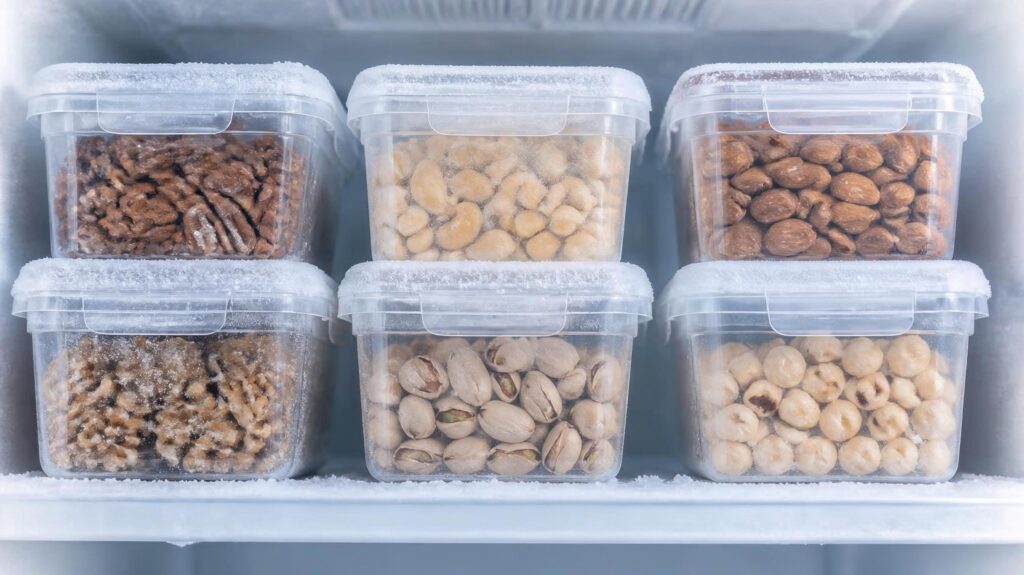
Storing nuts (something I’ve been doing wrong forever)
Like all food, proper storage is vital. The best way to store nuts is to refrigerate and/or freeze them. First, take them out of the store packaging and put them into airtight containers. Refrigerate for four to six months. In the freezer, they may last up to a year.
Storing them at room temperature, the way the store sells them, will cause your nuts to turn rancid and bitter in less than four months. Rancid nuts smell sour or moldy. They will also lose their firmness and develop an unpleasant bitter flavor.
Let’s eat!
There are lots of fantastic baking recipes that use nuts, but for something different here are two savory dishes that contain nuts, both courtesy of my husband, James Bone.
This first one is Wild Rice Cornbread stuffing. (I call it The World’s Most Complicated Turkey Stuffing.) Whatever you call it, it’s delicious!
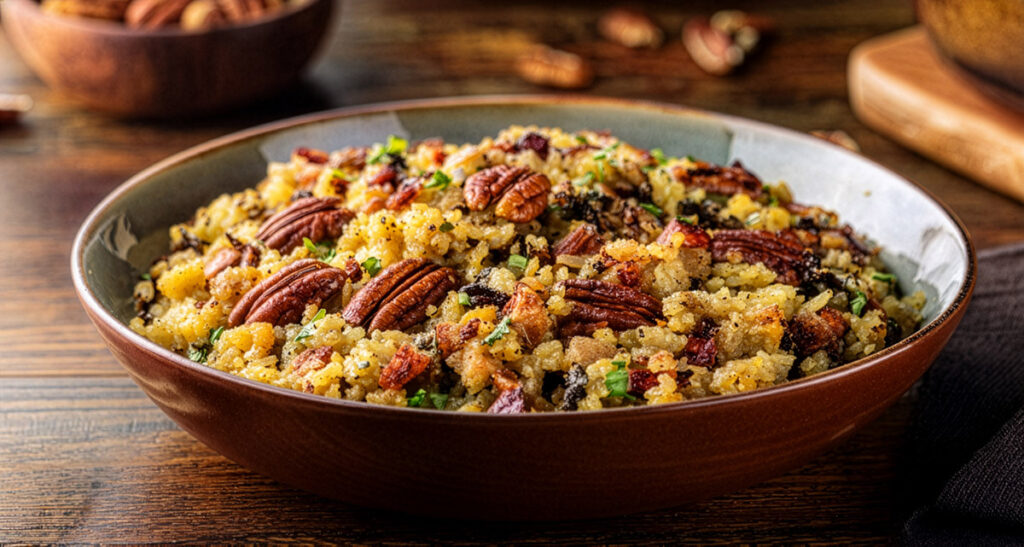
Wild Rice Cornbread Stuffing
Ingredients:
3 cups cooked wild rice (from 1 cup raw)
2-3 cups cornbread, crumbled
½ medium onion, diced
1 cup celery, diced (5 stalks)
½ cup bell pepper, chopped (approximately 1/2 large)
½ cup fresh parsley, chopped
1 clove garlic, minced
½ cup butter (1 stick)
2 tsp salt
1 tsp black pepper
1 tsp sweet basil
½ tsp sage (more is good!)
2 cups chicken broth
½ cup pecans, chopped (or walnuts)
Instructions:
Sauté onion, garlic, celery, bell pepper, and parsley in butter until transparent.
Place in mixing bowl and add the remaining ingredients and mix well.
Place in a 9 x 13 baking dish. (More chicken broth might be required or desired at this stage to maintain moistness.)
Cook for 30 minutes at 350 degrees.
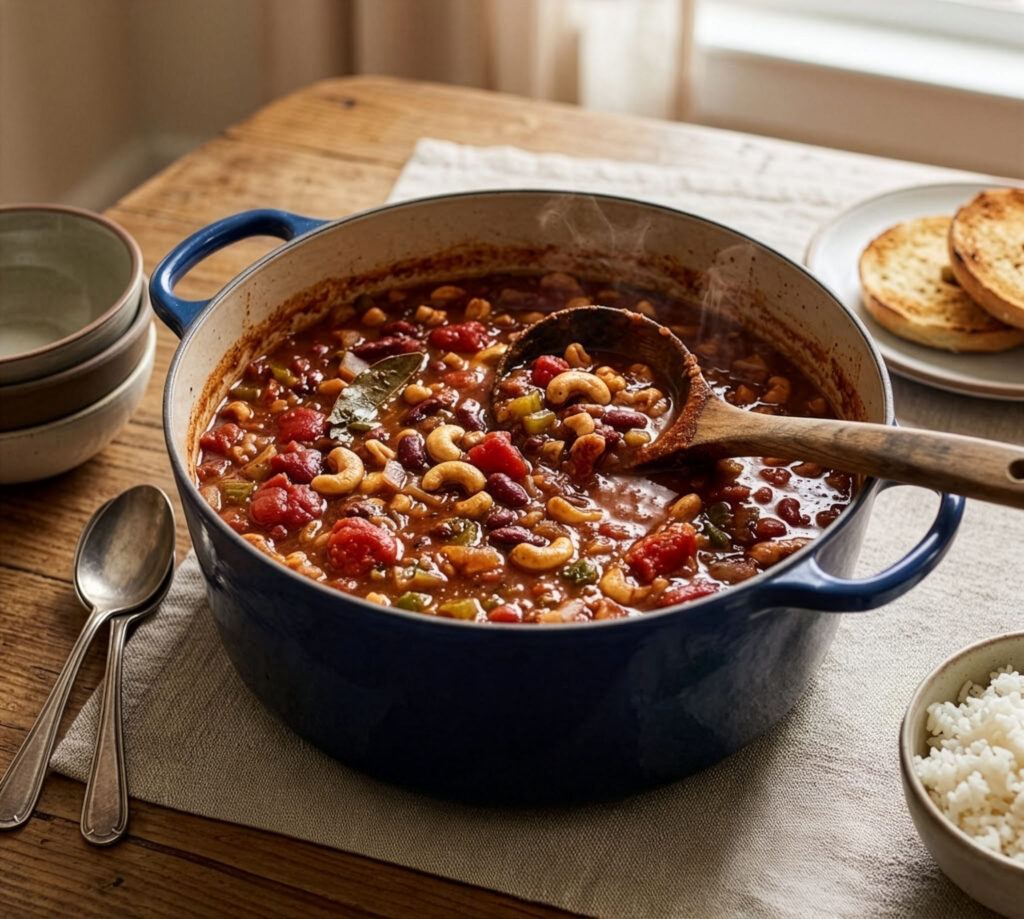
This second recipe is a great vegan dish or a tasty option for “Meatless Monday.”
Cashew Chili
Ingredients:
1 ½ cups uncooked kidney beans
2 cups unsalted cashews
6 cups vegetable broth, low salt if possible
2 bay leaves
2 onions, chopped
2 green peppers, chopped
2 celery stalks, chopped
1 quart crushed tomatoes
2 Tbsp cumin
2 tsp red wine vinegar
4 cloves garlic
1 Tbsp coriander
½ tsp oregano
½ tsp basil
½ tsp black pepper
¼ tsp cayenne pepper
Salt to taste
Instructions:
In a Dutch oven, sauté onions, green peppers, and celery for 5-10 minutes in 2 teaspoons of olive oil plus 1 tablespoon of butter.
Add remaining ingredients. Stir.
Bring to a boil, then simmer over low heat for 1-2 hours.
Serve with rice, bagels, or whatever you like!